DECK: *A system asked to simulate the photographic limitations of a 2004 Motorola RAZR delivers an image no RAZR could have captured.*
BYLINE: By Lydia Channing / Arts & Culture Editor, Slopgate
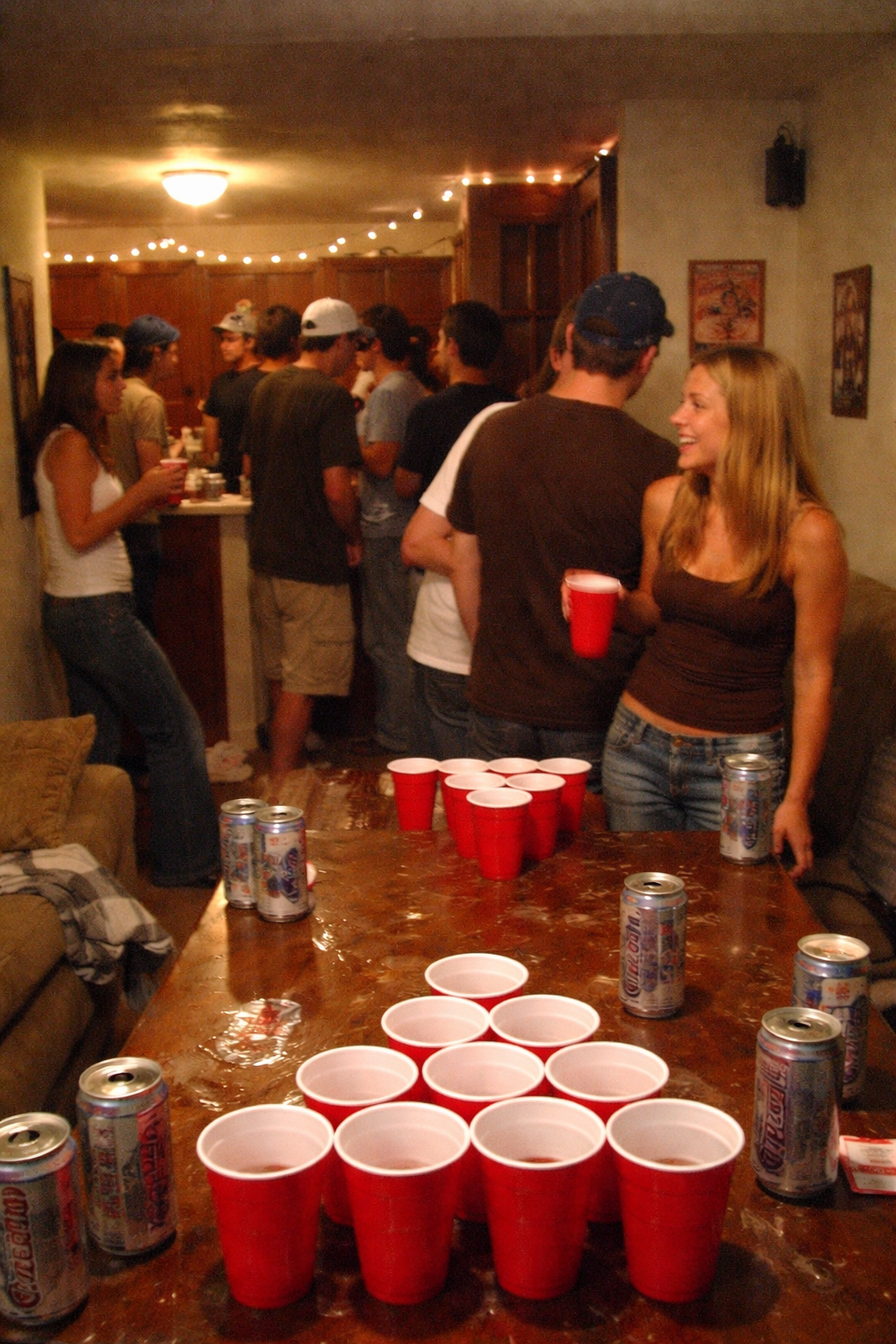
The specimen arrives with the force of a small contradiction. A user on Reddit's r/ChatGPT forum reports having asked the image-generation system to produce "a photo of a college party in 2004 taken on a flip phone," and the system has obliged with an image that is, by every measurable standard, too good at being bad.
Let us be precise about what a 0.3-megapixel VGA sensor aboard a 2004-era clamshell handset actually produced. It produced mud. It produced chromatic confusion. It produced photographs in which your roommate and a floor lamp shared the same indeterminate blur and your mother, receiving the image via MMS, would reply asking which one was you. The Motorola RAZR V3—the phone this prompt almost certainly invokes, whether its author named it or not—possessed a camera that regarded indoor lighting as a personal affront. Its white balance algorithm, if one could call it that, treated fluorescent tubes, incandescent bulbs, and the absence of light as roughly equivalent provocations. The results were not aesthetically degraded. They were epistemologically uncertain. You could not always determine what had happened in a RAZR photograph. You could only determine that something had.
The specimen before us has no such ambiguity. It knows exactly what happened at this party, because it invented the party, and it has applied the idea of degradation the way a graduate student applies the idea of Derrida—with sincere effort and no direct experience. The grain is present. The slight overexposure registers. A color cast warms the scene toward the amber frequencies that connote both tungsten lighting and personal memory. Each of these elements has been selected and deployed. Each is correct. And the effect is precisely wrong, because the failures of a flip phone camera were never selected. They happened to you.
Consider the faces. In an actual 2004 party photograph captured on consumer hardware, faces occupied perhaps forty pixels of vertical resolution and were subject to whatever the sensor's fixed-focus lens decided to do with motion, distance, and the mathematics of a CMOS chip the size of a lentil. Faces in these photographs were not faces so much as suggestions of faces—proposals that the viewer's memory was invited to ratify. The specimen's faces are legible. They possess structure. One can identify expressions, which is to say the system believes a photograph of a party is about the people at the party rather than about the camera's failure to adequately record them.
The system has trained on thousands of photographs taken by phones that could barely manage the task and derived from them a set of aesthetic parameters—grain density, blur radius, color temperature—that it applies with the uniform confidence of a system that has never once lost a photograph to an accidental pocket-dial. Every decision is conscious. None is experiential.
But the specimen is instructive beyond its technical paradoxes. It represents an emerging genre one might call commissioned nostalgia—the practice of asking a machine to produce false memories of periods the machine did not experience and the requester may not have either. The prompt is not "show me 2004." The prompt is "show me what I believe 2004 looked like," and the system, having no beliefs of its own, has produced a composite that satisfies the request precisely because it confirms the fantasy. The red Solo cups are present and oriented correctly. The clothing reads as period-appropriate. The composition suggests the barely-framed spontaneity of a snapshot without committing to the chaos of one. It is a memory that has been through quality assurance.
What the system cannot reproduce is the operational reality of taking such a photograph: the three-second shutter delay during which the moment passed, the storage limit of sixteen images that made each exposure a minor economic decision, the physical act of opening the phone and navigating two menu layers to reach the camera function while someone across the room did something worth recording and then stopped. The RAZR's photographs were bad because photography was, briefly, hard again—after a century of refinement, the camera phone returned picture-taking to a state of genuine difficulty, and the results carried that difficulty as visible information. The specimen carries no difficulty. It is fluent in a language it learned from transcripts.
One does not blame the machine for this. One observes it. The system was asked to perform imperfection and delivered a performance—technically accomplished, aesthetically coherent, and emptied of the single quality that made those original photographs interesting: the fact that no one involved was trying to make art, and the camera couldn't have helped them if they were.
Specimen: Digitally generated image depicting a college party scene with simulated early-2000s camera-phone degradation effects, including artificial grain, warm color cast, and controlled overexposure. Recovered from Reddit, r/ChatGPT, account unidentified, December 2024. Every solo cup in the frame is structurally intact and correctly oriented, which is itself a tell.