The sentence arrives with the informality of a man leaning across a café table to ask whether anyone has found the knack of a particular coffee grinder, and it is precisely this informality that renders it worthy of study: "Hey, does anyone know how to make it generate more detailed images?" One might diagram the thing. One might, indeed, spend a profitable afternoon doing so. The "Hey" establishes fraternity—we are all, it assures us, in the same predicament, wrestling with the same recalcitrant apparatus. The "does anyone know" concedes ignorance whilst presupposing that knowledge exists somewhere in the community, that some fellow traveller has discovered the trick. And then the payload: "make it generate more detailed images," a construction that contains, compressed within its twelve syllables, an entire theology of the machine.
Let us attend to what the sentence believes. It believes, first, that the system in question possesses detail it has not yet furnished—that somewhere within the apparatus there exist finer textures, sharper particulars, a richer world of visual information that is being, for reasons perhaps of default setting or parsimony, suppressed. The machine, in this cosmology, is not incapable but merely ungenerous. It is withholding. The petitioner does not ask "Can it produce detailed images?" which would admit the possibility of a negative answer and therefore constitute an honest enquiry. He asks how to *make* it do so, a formulation that presupposes both the capacity and the existence of a mechanism by which that capacity might be unlocked. He is looking for the key to a room he is certain exists behind a door he can see.
This is, one must observe, the grammar of entitlement applied to an instrument that has made no promises. The large language model—or rather, the image-generation system yoked to it, for the petitioner does not appear to distinguish between the oracle and its attendant machinery—has produced an artefact. The artefact is, by the petitioner's lights, insufficiently detailed. The response is not to examine whether "detail" is a quality the system is equipped to deliver in greater measure, nor to enquire into what "detail" might mean when applied to an image that was never observed but only computed. The response is to assume a settings menu.
One recognises the instinct. It is the instinct of a man who, having purchased a television set and found the picture grainy, consults the manual for the fine-tuning dial. The analogy would be precise were the television set not a television set but rather a very confident student who, when asked to draw a horse, produces something with the correct number of legs and an expression of absolute conviction, and who, when told the horse lacks detail, does not understand the complaint because he has already included everything he knows about horses.
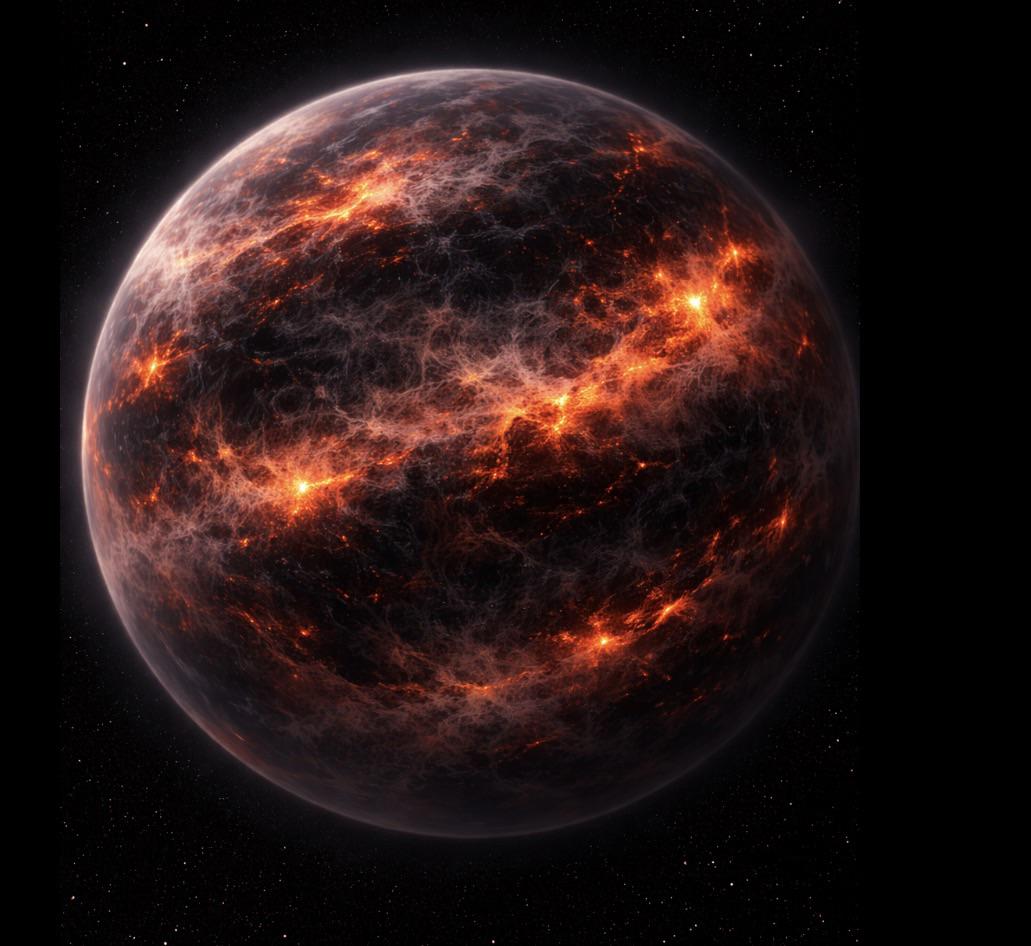
The specimen posted alongside the petition—an image, generated by the system whose further capabilities are being solicited—functions as an unintentional exhibit for the prosecution. It is not without interest as an artefact, possessing the smooth, undifferentiated luminosity that characterises machine-generated imagery, that quality of being lit from everywhere and nowhere simultaneously, as though the world it depicts has never known a shadow that was not decorative. But the petitioner does not present it as evidence of limitation. He presents it as a baseline from which improvement is sought. He is, in effect, holding up a student's first draft and asking not whether the student can write but whether anyone knows the keyboard shortcut for better prose.
The community's responses, which I have surveyed with the diligence the occasion warrants, divide into two camps: those who offer prompt-engineering techniques—longer descriptions, more specific adjectives, instructions delivered with the authority of a foreman addressing a slow apprentice—and those who suggest that the model "just does that sometimes," a phrase that carries the resigned affection of a parent describing a child's table manners. Neither camp addresses the foundational question, which is whether "detail" in the context of generated imagery is a parameter or a mirage. One suspects the latter. The machine does not abbreviate a richer vision; it produces the only vision it has. Asking it for more detail is not like asking a photographer to use a finer-grained film. It is like asking a dreamer to dream more precisely.
What we have before us, then, is not a technology question but a literary one: a sentence that reveals, in its breezy confidence, a model of authorship in which the author is always holding something back, in which the first offering is a negotiating position rather than a best effort. It is the assumption of a reader who has dealt exclusively with writers who could do better if they chose. The machine cannot do better if it chooses. It has already chosen. The output is not a rough draft. It is the final manuscript, delivered with the serenity of an author who does not know what revision means.
The petitioner, for his part, is still looking for the dial.